🧋 Bubble tea shops
Digital loyalty cards for bubble tea shops
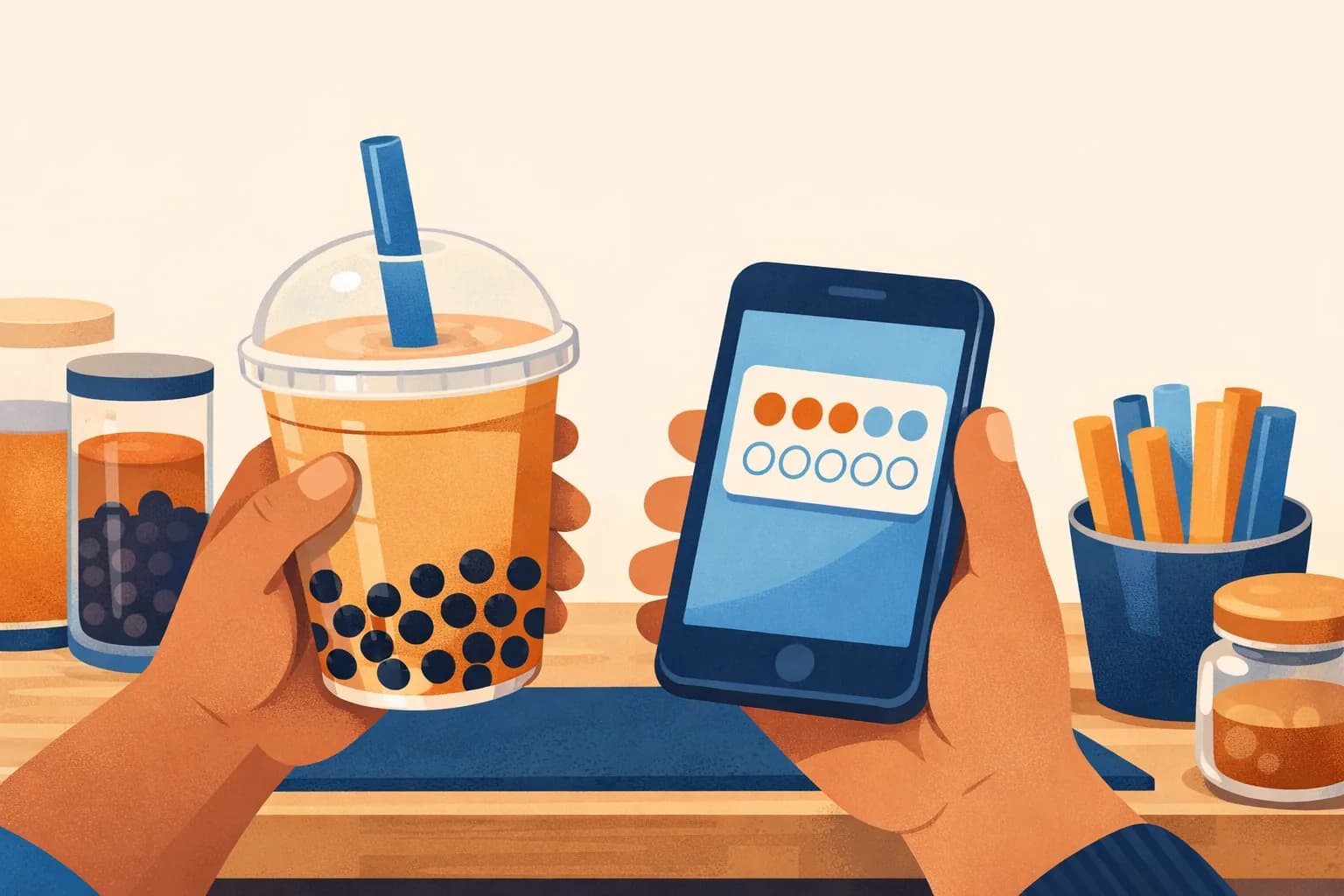
The best loyalty programme for a bubble tea shop is a stamp card in Apple Wallet or Google Wallet giving a free drink after ten, because the customer base is young, phone-native and visits frequently enough to finish a card quickly.
Stamps
Any drink free
10
Why this works for bubble tea shops
Bubble tea customers are the demographic most comfortable with wallet cards and most responsive to visible progress. Drinks cluster within a narrow price band, so stamps are both fair and instantly legible.
Bubble tea is bought in groups and on impulse, often by customers who will happily walk past two other shops to reach a preferred one. That walking distance is exactly what a loyalty card buys: a small, concrete reason to keep choosing the same place.
The category's customers skew young, which matters more than it sounds. This is the group least willing to install a single-shop app and most comfortable with a card appearing in their wallet, so the format gap between a wallet card and a branded app is at its widest here.
Group orders create an enrolment decision worth getting right. Enrolling the person paying is the default, but a shop that offers a card to each person in the group converts three or four customers from one transaction, which only works if enrolment takes seconds and needs nothing from them.
Why does this category suit stamp cards so well?
Because bubble tea is a habitual, low-ticket purchase with a young, phone-native customer base and dense competition on the same street: the exact conditions where a half-finished card decides which shop someone walks into.
The customer base also makes wallet delivery straightforward. A cohort that already keeps travel cards and event tickets in their phone wallet needs no explanation of what the card is or where it went.
How should customisation be handled?
Keep the reward as any drink rather than a base drink with toppings charged extra. Toppings are where the perceived value of a bubble tea sits, and a reward that strips them reads as a discount on the least interesting version of the product.
One stamp per drink, any size, any customisation, is the rule that generates the fewest counter disputes. Simplicity at the till is worth more than the margin saved by a caveat.
What about group orders?
Group orders are common in this category and worth a deliberate policy. One stamp per transaction is the simplest and most defensible, and it avoids a single customer collecting five stamps for a round they will not repeat alone.
What bubble tea shops usually struggle with
- Trend-driven, with customers chasing whatever is new
- Dense competition in the same few streets
- Group orders hide most of the individual customers from you
- Peak after-school and late-evening rushes leave no spare seconds
What we would set up for you
A stamps card with 10 as the goal and any drink free as the reward. Customers enrol by phone number at the counter (they never take out their phone), and the card lands in Apple Wallet or Google Wallet in about three seconds.
You can change the goal or the reward later without reissuing anyone's card, so there is no penalty for starting with this and adjusting once you have real data.
Start in the Loonine app
Loonine runs from the business app on iPhone and Android. Download it, design your card, and start your first paid month free.
More on running a loyalty programme
Stamps or points: which loyalty mechanic should you use?
How to pick the right loyalty mechanic for your business based on ticket variance, visit frequency and what you want customers to do more of.
Running one loyalty programme across multiple locations
How to run a single loyalty programme across two or more sites: one card or several, who pays for a reward redeemed elsewhere, and what changes with franchisees.
Discounts or loyalty rewards: which costs less?
A discount cuts margin on every sale including the ones you would have made anyway. A loyalty reward costs you once, after several visits. The arithmetic, worked through.
How much should a loyalty reward cost?
How to cost a reward properly using cost of goods rather than menu price, what percentage of customer spend is sensible, and the rewards that look generous while costing very little.