🌱 Garden centres
Digital loyalty cards for garden centres
The best loyalty programme for a garden centre is a points card in Apple Wallet or Google Wallet earning one point per euro, because demand is severely seasonal and the card's real job is giving you a way to reach customers in the months they would not think of you.
Points
€10 off once 250 points are earned
250
Why this works for garden centres
A garden centre earns most of its year between March and June, and the customers who appear then are the same ones every year. Points hold that relationship across the nine quiet months, and the card gives you a way to open a conversation in November.
A garden centre's problem is not competition but the calendar. Two-thirds of the year's trade arrives in a few spring months, the same faces appear each time, and then the site goes quiet while the costs continue.
Points are the right mechanic because a garden centre basket is wildly inconsistent, a packet of seeds, a tray of bedding plants, a €200 tree, and because spend accumulated in spring should still be there when the customer returns in autumn. Stamps would treat the seed packet and the tree alike, which in this trade is not a small error.
What a loyalty card really buys a garden centre is the off-season. A list of spring customers who can be reached in September for bulbs, in November for Christmas stock, and in February for the first seed sowing is a way of flattening the year that no amount of signage achieves.
How does a garden centre use loyalty in the off-season?
By sending a small number of seasonal messages to people who already shop there: autumn bulb planting, Christmas trees and decorations, the February start of the seed-sowing year. Each has a real date attached, which is what separates a useful message from a promotion.
The economics of this are unusually favourable. A garden centre's quiet months have staff, stock and space already paid for, so a message that converts even a small fraction of a spring customer list into a November visit is close to pure contribution.
Do points survive from one season to the next?
They must, and the expiry policy is the most important decision in this vertical. A twelve-month expiry quietly deletes the balance of exactly the customer you were trying to keep: the one who buys in spring and returns the following spring.
If you need an expiry for accounting reasons, make it at least two years and say so plainly on the card. Any shorter and the programme punishes the seasonal buying pattern that defines your entire customer base.
Should the café count towards the same card?
Yes, if you have one. A garden centre café is often the reason for a visit rather than an addition to it, and a card that earns on coffee and cake as well as compost captures visits that would otherwise go unrecorded.
It also changes what the data tells you. Café-only visits in January are a sign of a customer who stays in the habit of coming to the site through the winter, which is the behaviour a seasonal business most wants to encourage.
What garden centres usually struggle with
- Two-thirds of the year's trade arrives in a few spring months
- Nine quiet months with staff, stock and site costs running anyway
- Baskets range from a seed packet to a several-hundred-euro tree
- Annual buying cycles mean a short points expiry deletes real balances
What we would set up for you
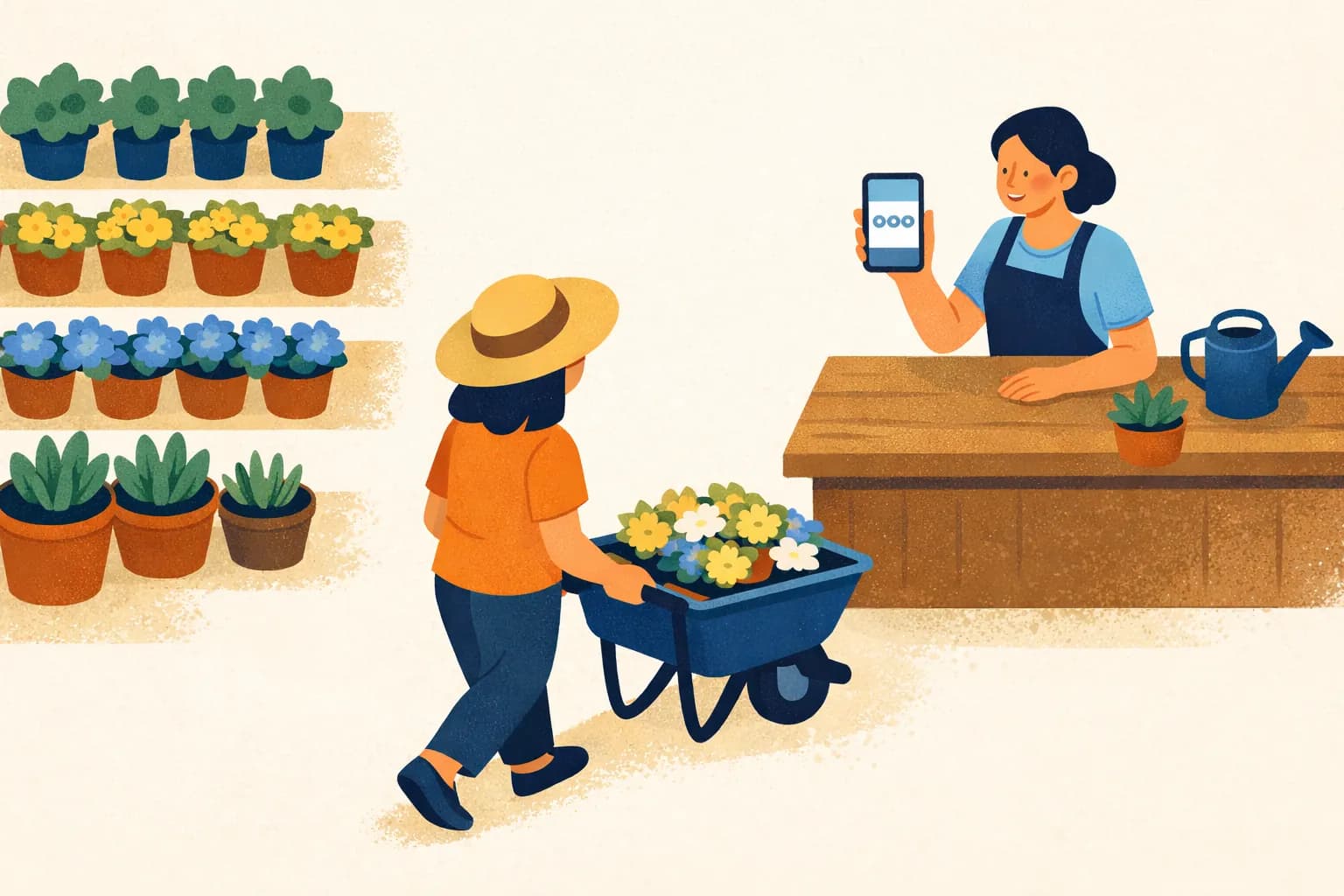
A points card with 250 as the goal and €10 off once 250 points are earned as the reward. Customers enrol by phone number at the counter (they never take out their phone), and the card lands in Apple Wallet or Google Wallet in about three seconds.
You can change the goal or the reward later without reissuing anyone's card, so there is no penalty for starting with this and adjusting once you have real data.
Start in the Loonine app
Loonine runs from the business app on iPhone and Android. Download it, design your card, and start your first paid month free.
More on running a loyalty programme
Stamps or points: which loyalty mechanic should you use?
How to pick the right loyalty mechanic for your business based on ticket variance, visit frequency and what you want customers to do more of.
How to measure repeat customer rate (and what to do with it)
The formula for repeat customer rate, the window to measure it over, what a good figure looks like by industry, and the two numbers that are more useful.
23 loyalty programme ideas that work for small businesses
Specific, costed loyalty mechanics for independent shops, cafés and service businesses, with the ones that reliably fail and why.
Why paper punch cards fail, and what to replace them with
Paper loyalty cards lose customers for three structural reasons. Here is what each one costs and how a wallet card fixes it.