🍦 Ice cream and gelato shops
Digital loyalty cards for ice cream and gelato shops
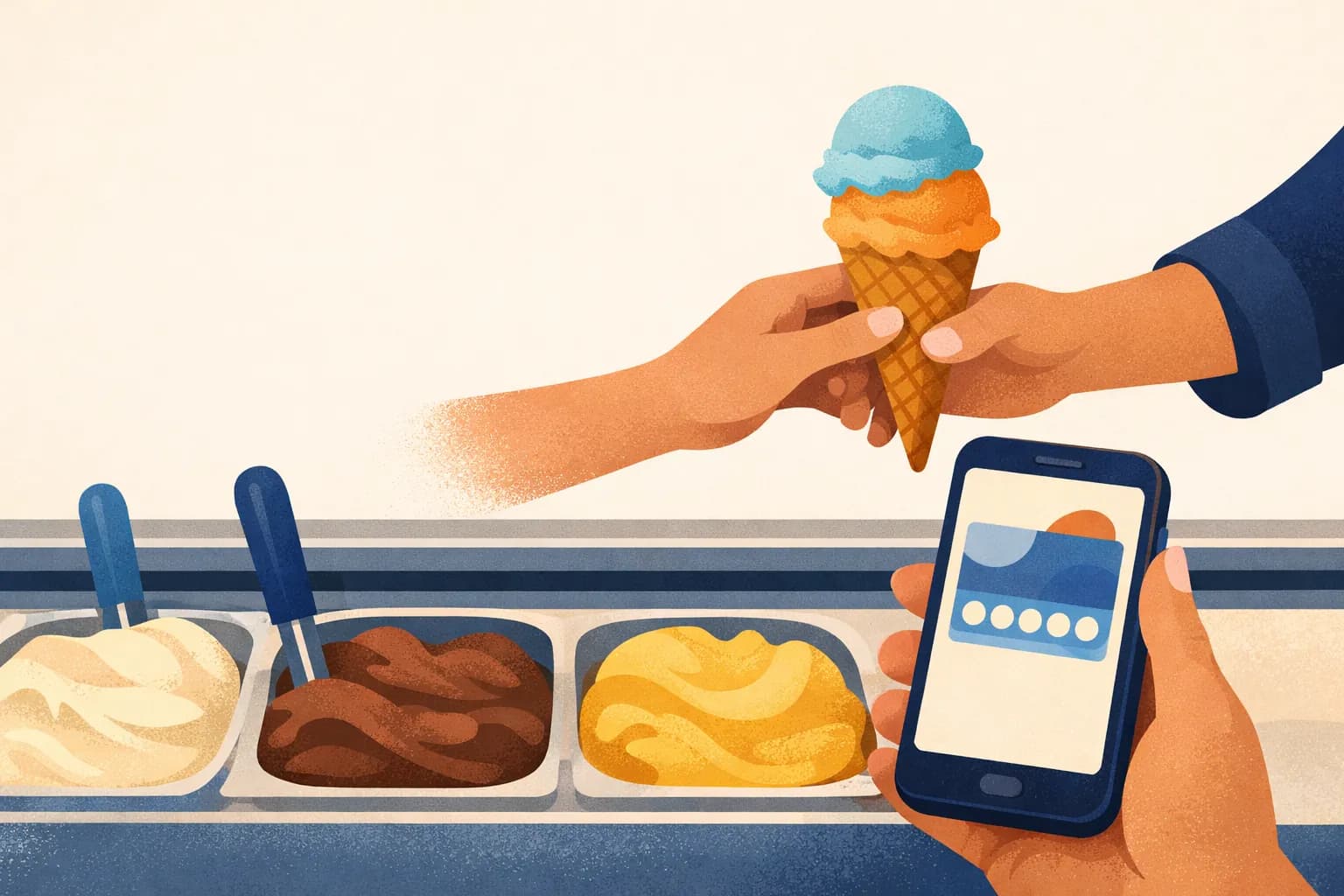
The best loyalty programme for an ice cream shop is a stamp card in Apple Wallet or Google Wallet giving a free scoop after eight, designed so the card survives the winter gap between seasons.
Stamps
A free single scoop
8
Why this works for ice cream and gelato shops
Ice cream is bought impulsively by families within a small radius, and progress towards a free scoop is something children actively remind their parents about, which is a marketing channel no other vertical gets for free.
Ice cream shops face a seasonality problem that makes loyalty unusually valuable: you have perhaps five strong months to build a relationship that has to survive seven weak ones. A paper card will not survive that gap. A wallet card will, because it cannot be lost and it is still there in March with four stamps on it.
Keep the goal short. Eight stamps completes within one season for a regular family, and a card that cannot be finished before the shop goes quiet for winter is a card nobody starts.
The family dynamic is worth designing around explicitly. Children track progress towards a reward far more attentively than adults do, and a card that shows the count clearly turns them into the people asking to come back.
How do you run loyalty in a seasonal business?
Set the threshold for your season rather than the calendar year, and carry balances across the closed months rather than expiring them. Eight stamps over a summer is achievable; the same card judged over twelve months is not.
Carrying balances is the part that compounds. A customer returning in May to find their card exactly where they left it in September is being told the programme is real, and that is worth more than the stamps involved.
What should the reward be?
A single scoop rather than a sundae. Scoops are your fair unit of reward and the marginal cost is small, whereas a sundae bundles toppings and labour into a reward the customer earned on plain purchases.
If you want a larger gesture, the better lever is a second, more distant threshold: a free sundae at twenty, rather than making the first reward expensive.
When should the card be promoted?
At the start of the season, not the peak. Enrolling in May gives a customer the whole summer to complete a card; enrolling in August gives them three weeks and a stalled balance. The August queue is still worth working, but the May queue is worth more per customer.
What ice cream and gelato shops usually struggle with
- Severe seasonality with a long quiet winter
- Weather-dependent trade that cannot be forecast
- Impulse purchases with almost no planned repeat
- Queues at peak leave no time for anything at the counter
What we would set up for you
A stamps card with 8 as the goal and a free single scoop as the reward. Customers enrol by phone number at the counter (they never take out their phone), and the card lands in Apple Wallet or Google Wallet in about three seconds.
You can change the goal or the reward later without reissuing anyone's card, so there is no penalty for starting with this and adjusting once you have real data.
Start in the Loonine app
Loonine runs from the business app on iPhone and Android. Download it, design your card, and start your first paid month free.
More on running a loyalty programme
Stamps or points: which loyalty mechanic should you use?
How to pick the right loyalty mechanic for your business based on ticket variance, visit frequency and what you want customers to do more of.
11 loyalty programme mistakes that quietly kill the results
The failures that do not announce themselves: thresholds nobody reaches, enrolment that decays after launch, rewards that read as mean, and messages that train customers to ignore you.
How to calculate customer lifetime value for a small business
A simple, defensible way to work out what a customer is worth over their whole relationship with you, and what to do with the number once you have it.
How to design a loyalty card that customers open
What belongs on a wallet loyalty card, what to leave off, and why the back of the card matters more than the front for the questions customers ask.