🥤 Juice bars
Digital loyalty cards for juice bars
The best loyalty programme for a juice bar is a wallet stamp card rewarding a free drink after eight or ten purchases, which suits the high-frequency, habit-driven purchase pattern of health-focused customers.
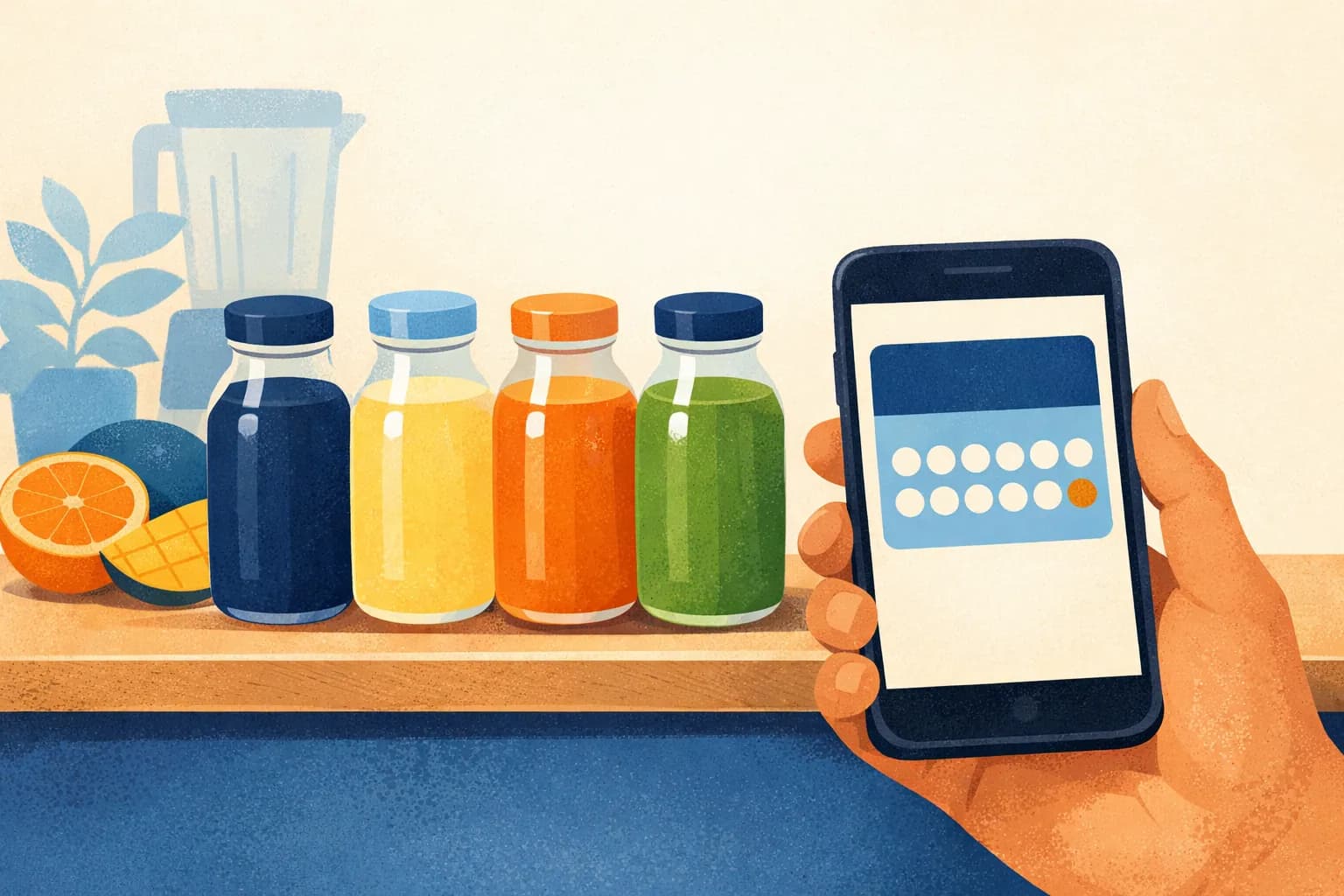
Stamps
A free juice or smoothie
8
Why this works for juice bars
Juice bar customers are routine-driven, often the same order on the same days, and a stamp card converts an existing routine into a tracked, rewarded one.
Juice and smoothie customers tend to be among the most habitual on the high street, frequently buying as part of a gym or commute routine. That makes them cheap to retain and expensive to lose.
Because the ticket is higher than a coffee, eight stamps is usually a better goal than ten: the total spend to reach a reward stays in a range that feels fair.
The seasonality of this category makes push marketing unusually valuable. A wallet notification during the first warm week of the year reaches customers at exactly the moment demand turns.
How does seasonality affect the threshold?
Juice bars trade harder in warm months, so a threshold set in summer will feel unreachable in winter. Set it against your quieter season: eight stamps at one or two visits a week is roughly six weeks, which holds up year-round.
The alternative is to keep a summer threshold and accept that winter cards stall. That is worse than it sounds: a stalled card is a visible reminder that the goal is out of reach, and customers disengage from the programme rather than from the season.
Should a subscription replace the card?
For a juice bar with real daily regulars, a prepaid multi-visit pack often beats a stamp card on cash flow and commitment. It is a different instrument, though: it monetises intent rather than building habit, and it excludes the occasional customer the stamp card is meant to convert.
Running both is reasonable: the card for everyone, the pack for the customers the card identifies as your most frequent.
What reward works best?
A free drink of the customer's choosing rather than a fixed item. Juice and smoothie menus have wide price spreads, and a reward limited to the cheapest option is read as a technicality. The margin risk is smaller than it looks because most customers redeem on their usual order.
What juice bars usually struggle with
- Sharply seasonal demand leaves winter trade thin
- High price per item makes customers reward-sensitive
- Competing with supermarket and convenience alternatives
- Customer routines break with a job change and are rarely rebuilt
What we would set up for you
A stamps card with 8 as the goal and a free juice or smoothie as the reward. Customers enrol by phone number at the counter (they never take out their phone), and the card lands in Apple Wallet or Google Wallet in about three seconds.
You can change the goal or the reward later without reissuing anyone's card, so there is no penalty for starting with this and adjusting once you have real data.
Start in the Loonine app
Loonine runs from the business app on iPhone and Android. Download it, design your card, and start your first paid month free.
More on running a loyalty programme
Stamps or points: which loyalty mechanic should you use?
How to pick the right loyalty mechanic for your business based on ticket variance, visit frequency and what you want customers to do more of.
Do loyalty programmes work?
An honest look at the evidence: where loyalty programmes measurably change behaviour, where they only subsidise customers you already had, and how to tell which is happening.
How to measure repeat customer rate (and what to do with it)
The formula for repeat customer rate, the window to measure it over, what a good figure looks like by industry, and the two numbers that are more useful.
23 loyalty programme ideas that work for small businesses
Specific, costed loyalty mechanics for independent shops, cafés and service businesses, with the ones that reliably fail and why.